It’s been a smoky few weeks here in Kamloops (and beyond) so aside from chasing clean air locations (smoke and air quality maps help a lot!), we also do our best to find delicious seasonal produce. Stone fruit is high on the list because it’s perfect when in season, easy to freeze and/or make into amazing desserts. So where to find it, you may ask?
Stone fruit when you need some
It’s almost hard to avoid it during the summer around here. And when has anyone ever complained they have too much lying around? Okay, some people do, and that’s great because they register their fruit trees or other crops with the Gleaning Abundance Project (through the Kamloops Food Policy Council).
Volunteers pick fresh produce from local properties that register their trees or garden space to be ‘gleaned’ and thus shared between volunteers, owner and charities. Check it out and put your name down to volunteer if you have the time. It’s worth it.
More options yet, and why you should eat stone fruit
Otherwise, the farmer’s market has lots of it, then local stores that feature locally grown produce (NuLeaf is one of the place where you can buy them by the box). And as it happens, you’ll likely stumble upon some apricot, yellow plum, cherry or plum tree growing and producing lots in public spaces because at some point someone planted them and that’s a wonderful thing to discover.
So why would you chase after stone fruit? A few good reasons: they contain various minerals and vitamins A, C (various amounts depending on the type, but they all do), fibre (lots of it fast-fermenting, which is why going nuts on fresh fruit can make us bloated and gassy, so go easy if you are sensitive), and loads of phytochemicals which are found especially in the peel so make good use of them too.
The many (many) options when your world contains stone fruit
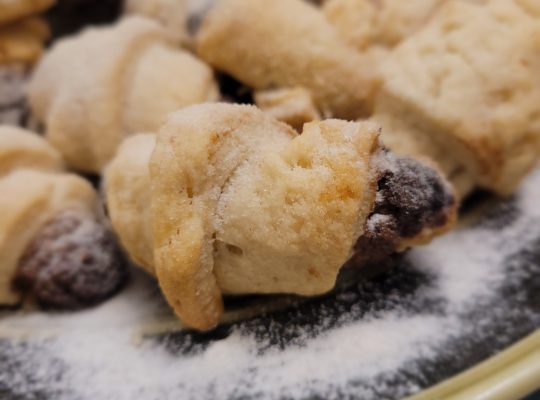
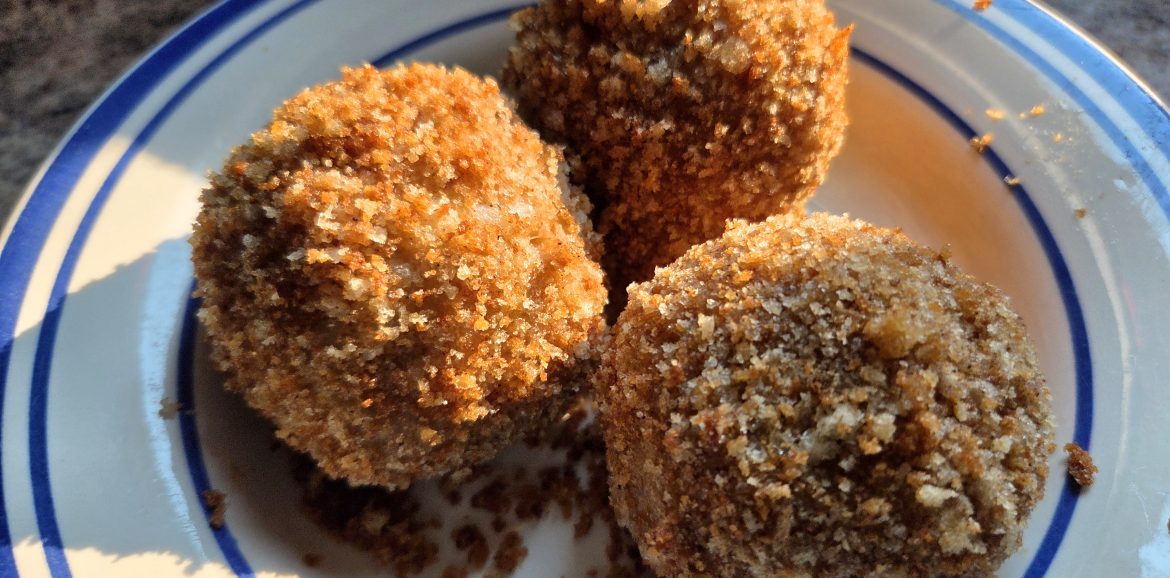
It feels wrong to pick a favourite considering that I love them all, though at the moment I am all about the Italian plums because I can make one of my preferred childhood desserts and that’s plum dumplings (recipe below).
So what to do with all that stone fruit you may happen upon? Eat fresh, or as part of a salad, or your morning yogurt and cereal bowl. Excess fruit? Remove the pits and freeze on trays, then store in the freezer for a taste of summer sometime in mid-January. Or dehydrate some for later use. Peaches and nectarines are our favourites.
The easiest desserts to make
… Starting with the easiest: a sauce which you make by slowly cooking the pitted fruit (stir often to prevent sticking). It goes well on yogurt (chilled of course), or pancakes or you can thicken it with chia seeds and use it as fresh jam (within a week in the fridge, at most).
And more options yet with crisps and cobblers. I usually fill the bottom of a baking tray with pitted fruit and sprinkle some cinnamon on it. Then I make a mix of oat flakes (one cup or so), one stick veggie butter (melted), spices such as vanilla extract, cloves and/or nutmeg, a couple of tablespoons of brown sugar or maple syrup, and a half a cup of chopped nuts. Spread over the fruit and bake at 375 for 40 minutes or until fruit is bubbly and the top nicely golden. It’s great fresh out of the oven and better yet the next day.
What about plum dumplings?
I have yet to let a summer pass without having any. I like them hot off the pan and also cold from the fridge, and this I will also try to freeze some this year because winter us will love them. So here it goes:
- For the dough.
- You need around 1 lb potatoes (five medium size potatoes for about 15 or so dumplings), boiled in salt water and in their skin until soft.
- Peel and mash, allow to cool, then add 1 ½ to 2 cups of whole wheat (or spelt) flour, and 1 egg.
- Mix well and set aside.
- If the dough is too sticky, add a bit more flour.
- Get the plums ready.
- Wash and remove the pit.
- If they are too big, use halves. Otherwise, a whole pitted plum should do.
- Also, fill a pot with water and bring it to boil (optional add salt, which I do as I think they taste better) so it’s ready to go when you have finished making the dumplings.
- Get the breadcrumb mixture ready.
- Heat up a few tbsp of olive or canola oil and one cup of breadcrumbs, which you toss around on low to medium heat until the breadcrumbs are a nice golden hue.
- Add 1-2 tbsp of brown sugar and 1 ½ tbsp of cinnamon and mix it all in.
- Turn to very low heat to prevent burning.
- Prepare and cook the dumplings.
- With clean hands and on a lightly flour-dusted surface, make a roll from the whole amount of dough which you then slice (half an inch or so slices).
- Flatten each slice, place a pitted plum or a half in the middle and bring the edges together to form a well-sealed dumpling.
- Set aside on a large plate and once they are all done, then place them gently in the pot of boiling water (not roiling!) and wait until they float to the surface, which is somewhere around 10-15 minutes.
- Scoop them with a slotted spoon and place them in the pan with hot, perfectly golden breadcrumbs.
- Roll them around until covered with the breadcrumb mixture and set aside on a plate to cool.
- They are delicious hot and cold, but of course the cold ones will have the extra advantage of resistant starch. Treat for you, treat for your gut bugs😁.